

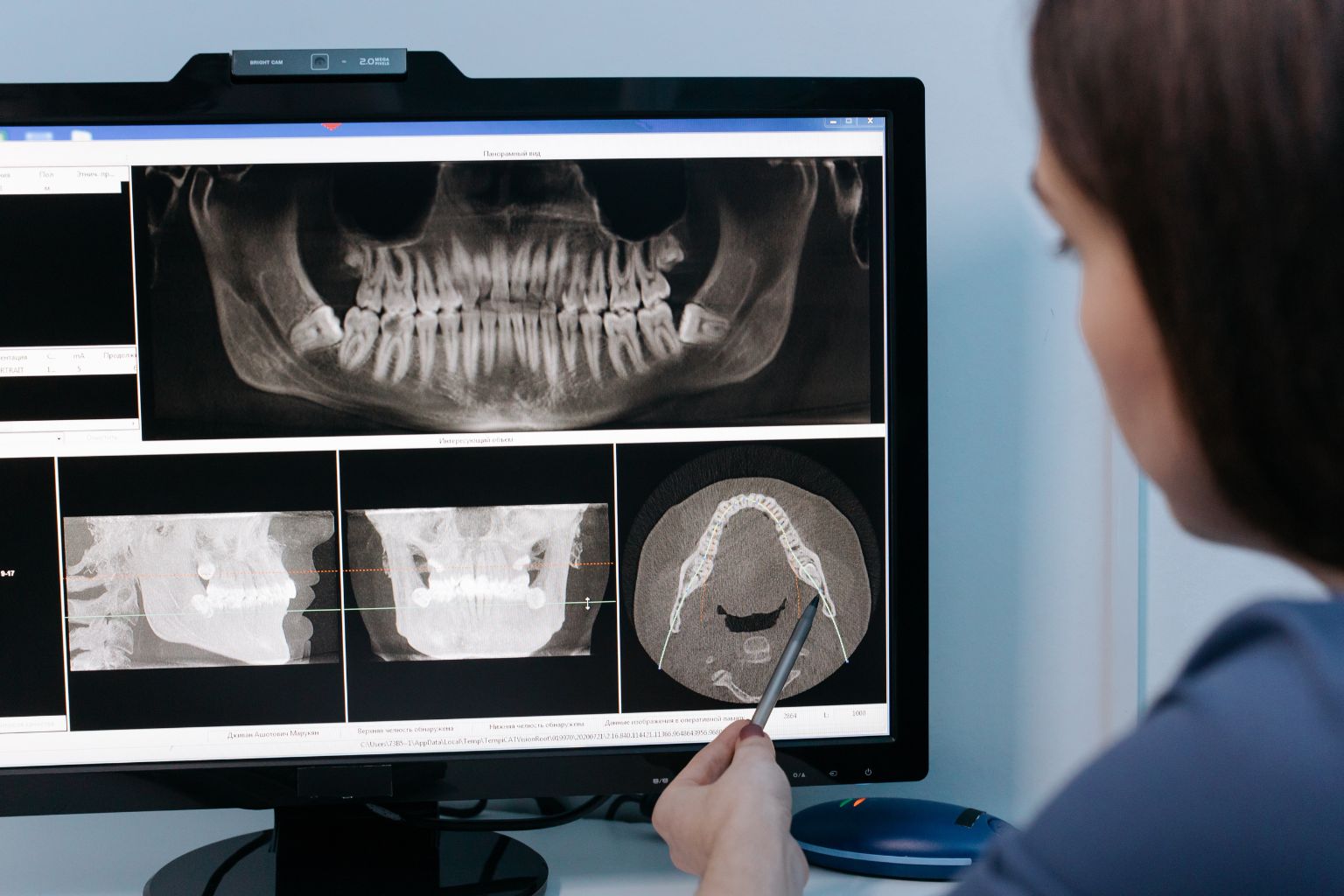
If you’re considering dental implants, you may hear your provider recommend a CBCT scan for dental implants before treatment begins. It’s normal to wonder why extra imaging is needed, especially if you’ve already had dental X-rays in the past.
A CBCT scan creates a detailed 3D view of your teeth, jawbone, nerves, and surrounding anatomy. That additional information can help clinicians evaluate whether implants are appropriate, plan placement more precisely, and identify factors that may affect treatment.
What a CBCT Scan Is (and How It’s Different From Standard X-Rays)
A CBCT scan, or cone beam CT dental implants imaging, is a type of specialized 3D scan used in dentistry. The technology captures hundreds of images around the head and combines them into a three-dimensional model of the teeth, jawbone, nerves, and surrounding structures.
Traditional dental X-rays are useful for evaluating teeth and some bone conditions, but they provide flat, two-dimensional images. A CBCT scan for dental implants offers depth and spatial detail that standard X-rays cannot show in the same way.
This form of 3D dental imaging for implants may help clinicians evaluate:
- Bone width and height in the implant area
- Bone density and available support
- The location of nerves in the lower jaw
- Sinus anatomy in the upper jaw
- Existing restorations or impacted teeth
- Signs of infection, bone loss, or anatomical variations
The goal is not simply to collect more images, but to gain a more complete understanding of the treatment area before implant placement.
What Your Surgeon Can See in 3D
Dental implant placement requires enough healthy bone and adequate space to position an implant safely. A dental implant planning scan provides detailed information that may influence treatment recommendations.
Bone Volume and Density
Implants need sufficient bone support. CBCT imaging allows providers to assess available bone height, bone thickness (width), and areas of reduced density or bone loss.
If bone volume is limited, clinicians may discuss alternatives such as bone grafting or modified treatment approaches.
Nerve Location
In the lower jaw, important nerves run through areas where implants are commonly placed. A CBCT scan can help estimate the position of these structures and support planning intended to avoid complications.
Sinus Anatomy
For implants in the upper back jaw, sinus position matters. Some patients have less available bone beneath the sinus cavity, which may affect treatment options.
Jaw Shape and Anatomical Variations
Every patient’s anatomy is different. Three-dimensional imaging can reveal variations that might not appear clearly on conventional X-rays.
How CBCT Supports Safer, More Predictable Implant Planning
No imaging method can guarantee outcomes, and every surgical procedure carries some level of risk. However, detailed diagnostics may help clinicians plan treatment with greater precision.
A CBCT scan for dental implants may support:
- More individualized implant positioning
- Better estimation of implant size and angulation
- Identification of anatomical limitations before surgery
- Planning for grafting or additional procedures when needed
- Improved communication between surgical and restorative providers
Because implant success depends on many factors, including oral health, healing ability, smoking status, and bone quality, imaging is only one part of comprehensive treatment planning.
Is CBCT Safe? Understanding Radiation Exposure
Patients often ask about radiation exposure during imaging, which is a reasonable concern. The CBCT radiation dose dental scans deliver varies depending on the machine, scan size, and purpose of imaging. In many cases, CBCT uses lower radiation levels than a conventional medical CT scan, though exposure is typically higher than a single standard dental X-ray.
Providers generally aim to follow the principle of using imaging only when clinically appropriate and selecting the lowest exposure necessary for diagnosis.
If you are pregnant, believe you may be pregnant, or have concerns about radiation, discuss them with your dental provider before imaging.
What Patients Should Expect During the Scan
A dental implant planning scan is typically quick and noninvasive.
During the appointment:
- You may remove glasses, jewelry, or removable dental appliances.
- You’ll stand or sit in the scanning unit.
- The scanner rotates around your head for several seconds.
- Remaining still helps capture clear images.
- The scan is completed, and images are reviewed by the provider.
The process generally does not involve needles, sedation, or discomfort.
How CBCT Fits Into the Implant Consultation Workflow
Not every patient follows the same treatment process. This is what sbut implant consultations often include:
Step 1: Oral Examination and Medical Review
Your provider evaluates overall oral health, missing teeth, gum condition, and medical history.
Step 2: Imaging and Diagnostics
This may include traditional X-rays, photographs, or a CBCT scan for dental implants when additional detail is needed.
Step 3: Treatment Planning
The clinician reviews findings and discusses possible options, timelines, costs, and whether preparatory procedures may be recommended.
Step 4: Implant Placement and Restoration
If treatment moves forward, the implant procedure and final restoration are planned based on the collected information.
The Bottom Line on CBCT and Implant Planning
A CBCT scan for dental implants provides detailed 3D information that may help clinicians evaluate bone structure, identify anatomical considerations, and support personalized treatment planning. While imaging alone does not determine implant success, it can be an important part of understanding whether implants are appropriate and how treatment may be approached.
If you’re exploring dental implants and have questions about whether a CBCT scan may be part of your treatment plan, our team can help. Contact us to discuss your options, learn more about the implant evaluation process, and determine the next steps based on your individual needs.