

The decision between a screw retained vs cement retained implant crown goes beyond technical details. Choosing one or the other directly affects how your restoration looks, feels, and performs over time. While both options are widely used and clinically successful, they differ in structure, maintenance, and how issues are managed down the line.
This guide breaks it down in clear, patient-friendly terms so you understand what’s happening in your mouth and why your provider might recommend one option over the other.
The Parts of an Implant
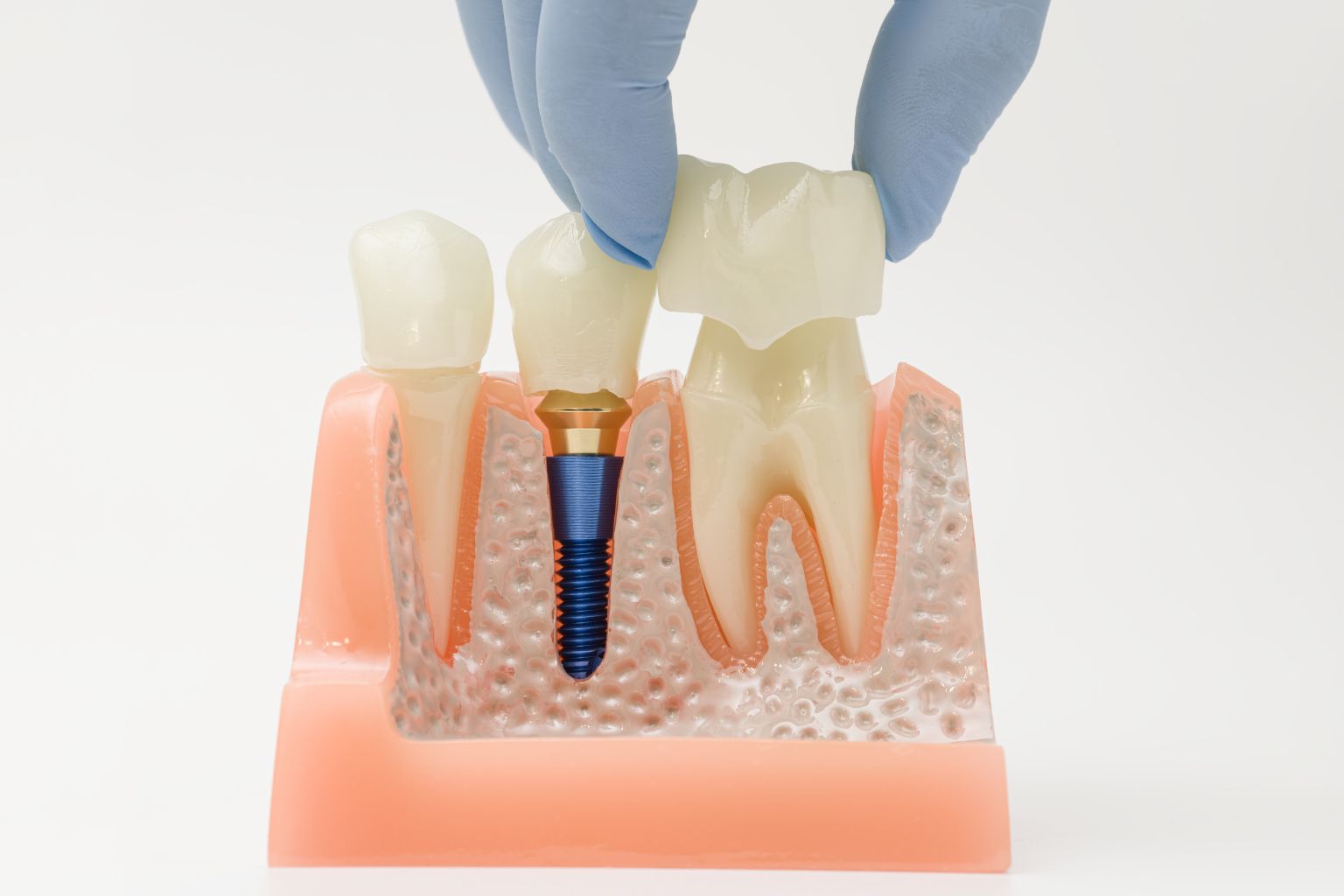
Before diving into the comparison of screw retained vs cement retained implant crowns, it helps to understand the basic structure of a dental implant:
- Implant: The titanium post is placed in the jawbone (acts like a tooth root)
- Abutment: The connector piece that sits on top of the implant
- Crown: The visible “tooth” placed on top
When discussing implant crown vs abutment, the key difference is function: the abutment connects, while the crown restores appearance and chewing ability.
Things change in how the crown attaches to the abutment (or implant):
- In a screw-retained implant crown, the crown is secured using a small screw
- In a cement-retained implant crown, the crown is bonded (cemented) onto the abutment.
That single difference shapes everything from aesthetics to long-term maintenance.
Screw Retained vs Cement Retained Implant Crown
Here’s a clear side-by-side comparison of screw retained vs cement retained implant crown options, highlighting the key differences in aesthetics, maintenance, and long-term performance.
| Feature | Screw Retained Implant Crown | Cement Retained Implant Crown |
| How it’s attached | Secured with a screw directly to the implant or abutment | Bonded (cemented) onto an abutment |
| Aesthetics | May have a small visible access hole (usually filled) | No access hole, typically more natural-looking |
| Ease of removal | Easily removable for repairs or adjustments | More difficult to remove; may require cutting the crown |
| Repair process | Simple access makes fixes more predictable | Repairs can be more complex and invasive |
| Risk of complications | Possible screw loosening (manageable) | Risk of excess cement affecting gum health |
| Implant crown loosening | More commonly related to screw mechanics, but easier to fix | Less about loosening, more about cement failure or retention issues |
| Implant crown maintenance | Generally easier due to retrievability | Requires careful monitoring, especially under the gumline |
| Best use cases | Back teeth, cases needing long-term access | Front teeth, high-aesthetic zones |
| Positioning flexibility | Requires precise implant angle for ideal results | Allows more flexibility via the abutment |
| Long-term management | Preferred when future adjustments are likely | Suitable when aesthetics are the top priority |
Common Issues
Regardless of which option you choose, certain issues can occur over time:
Implant crown loosening
- More common in screw-retained designs (due to the screw mechanism)
- Usually straightforward to fix by tightening or replacing the screw
Excess cement (cement-retained only)
- Can irritate the surrounding gum tissue if trapped below the surface
- Prevention depends heavily on precise technique during placement
Repairs and adjustments
- Screw retained implant crown: typically removable and reusable
- Cement retained implant crown: may need replacement if removed
These differences are a major reason why your provider carefully considers your case before recommending one option.
How your Provider Chooses the Right Option
There’s no universal “better” choice in the screw retained vs cement retained implant crown debate; it depends on several factors:
- Tooth location (front vs back)
- Bite alignment and implant angle
- Aesthetic priorities
- Gum health and risk factors
- Need for future access or adjustments
Your provider balances these factors to recommend what works best for your long-term outcome.
Caring for Each Type Long-term
Regardless of the attachment method, good implant crown maintenance is essential.
| Daily Care | Professional Care | What to Watch For |
|
|
|
While both options are durable, long-term success depends heavily on consistent care and early attention to small issues.
Ready to Choose the Right Implant Crown?
Understanding the difference between a screw retained vs cement retained implant crown is an important step, but the right decision always depends on your specific case.
If you have questions about your options, concerns about implant crown loosening, or want guidance on long-term implant crown maintenance, speaking with an experienced provider can make all the difference.
Contact us today to schedule a consultation and get a personalized recommendation tailored to your smile, goals, and long-term oral health.